Amigari Downs Lock ExpertsService bulletin 2 of 3
High Security Locks: what the visit covers
This service suits anyone who wants to stop wondering.
Fort Erie, Ontario · Locksmith · open 24/7
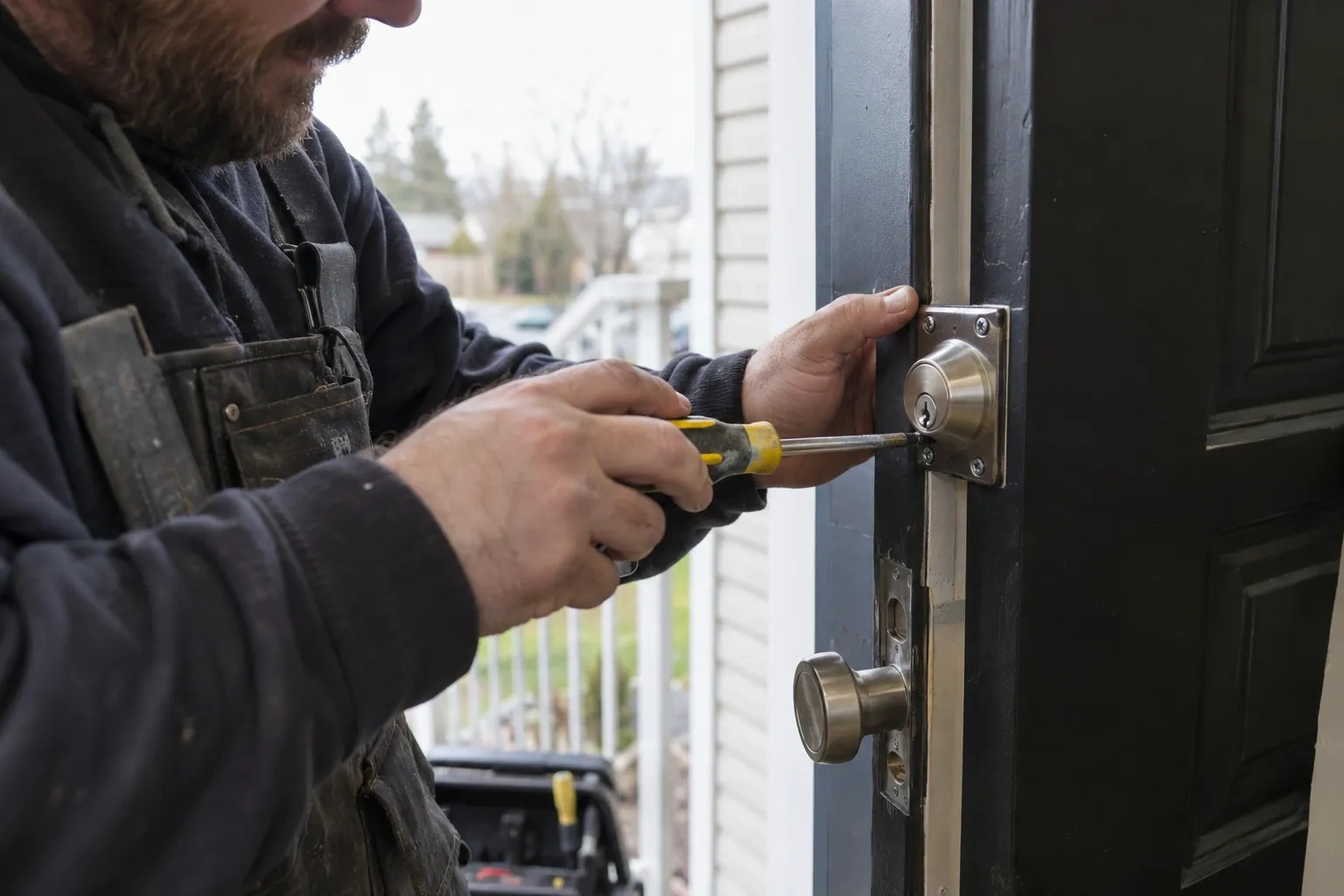
This service suits anyone who wants to stop wondering. Homeowners who have inherited unknown keys with a house, landlords who want one controlled key system across units, and businesses protecting stock, records or medication all ask for it. The locksmith explains the choices in plain terms, from a graded deadbolt with a patented cylinder up to laboratory-rated cylinders and heavy commercial lock bodies, and helps you decide which doors deserve which level. Then the work is done cleanly, every key is tested in every lock, and you leave with the documents that let you control future keys.
Reading the cylinder you have now
The existing cylinder tells the locksmith a great deal. A standard pin tumbler with an open keyway can be picked, bumped and duplicated by anyone with the blank. Worn pins let a key that is not quite right jiggle it open. A cylinder that spins loosely in its housing or shows a scratched face has been attacked or simply worn out. The locksmith identifies the format, whether key-in-knob, rim, mortise or interchangeable core, because that determines which high-security cylinders will drop into your present hardware and which will need a new lock body altogether.
Reinforcing the strike and frame
The strike is where a forced door actually fails, so it gets serious attention. The stamped plate comes off and the pocket is deepened to accept a box strike or a long reinforced strike, fastened with three-inch screws that pass through the jamb into the wall framing. Stripped or split wood is filled and doweled first so the screws have something to hold. Where the frame is thin, a wrap-around reinforcer around the door edge and a full-length jamb plate are options. The result is a bolt that ties the door into the house rather than into a strip of trim.
Watching the patent calendar
Patented keyways protect you for as long as the patent lasts. When it expires, blanks may be sold openly and the copy-control layer weakens, though the mechanical resistance of the cylinder stays. The locksmith notes the patent term of your system at handover so the date is not a surprise. Many years before it arrives, the same hardware can usually be moved to a newer patented keyway by changing cylinders and keys while the lock bodies stay. Treat it like a roof: nothing needs doing for a long while, but the date is written down.